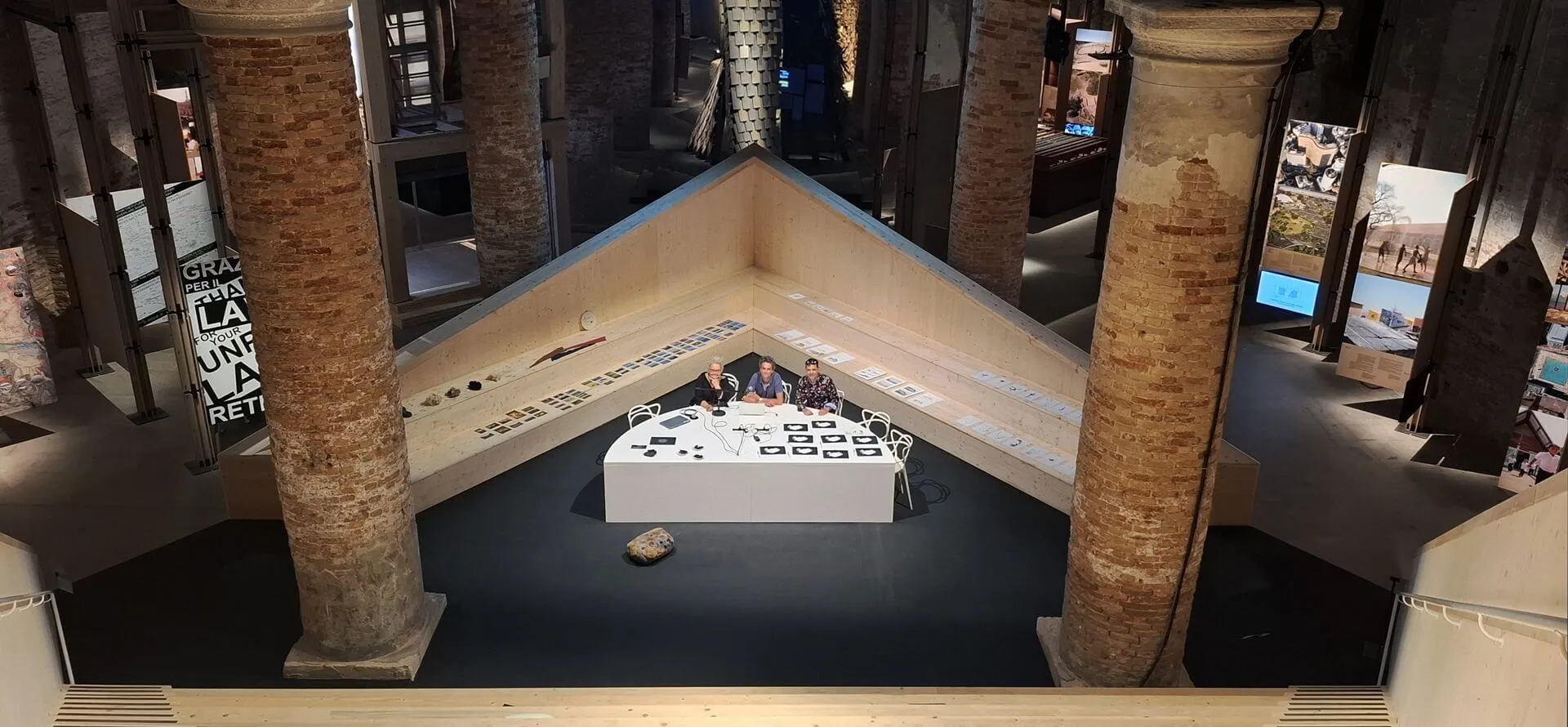
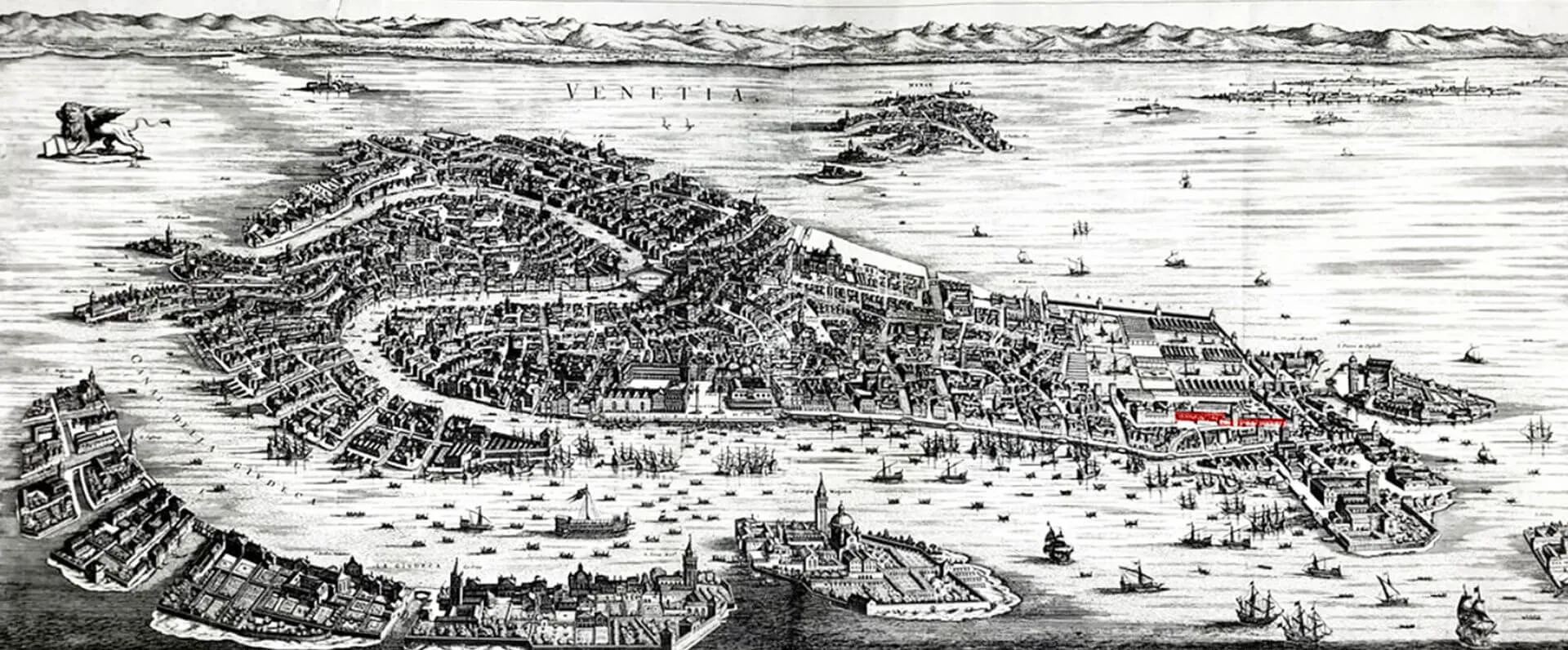
The Icelandic Nordscape Lab presented at the International Architecture Exhibition – La Biennale di Venezia.
The exhibition honors Iceland’s cultural and natural landscapes by exploring the connections between sheep, wool, and the land, closely intertwined with traditional practices.. the influence of sheep in shaping the territory, the significance of wool, and the collective art of knitting.
Speakers’ Corner | GENS Public Program | Arsenale
KNITTING A LIVING HERITAGE: FROM ICELANDIC SHEEP WOOL TO LAND
In dialogue with Carlo Ratti’s curatorial proposal, Intelligens. Natural. Artificial. Collective, and located in the Speakers’ Corner at the Arsenale, the series of events explored collective cultural identity and the fragile natural heritage of Iceland. The initiative emerged from academic members at the Faculty of Planning & Design, Agricultural University of Iceland (AUI).
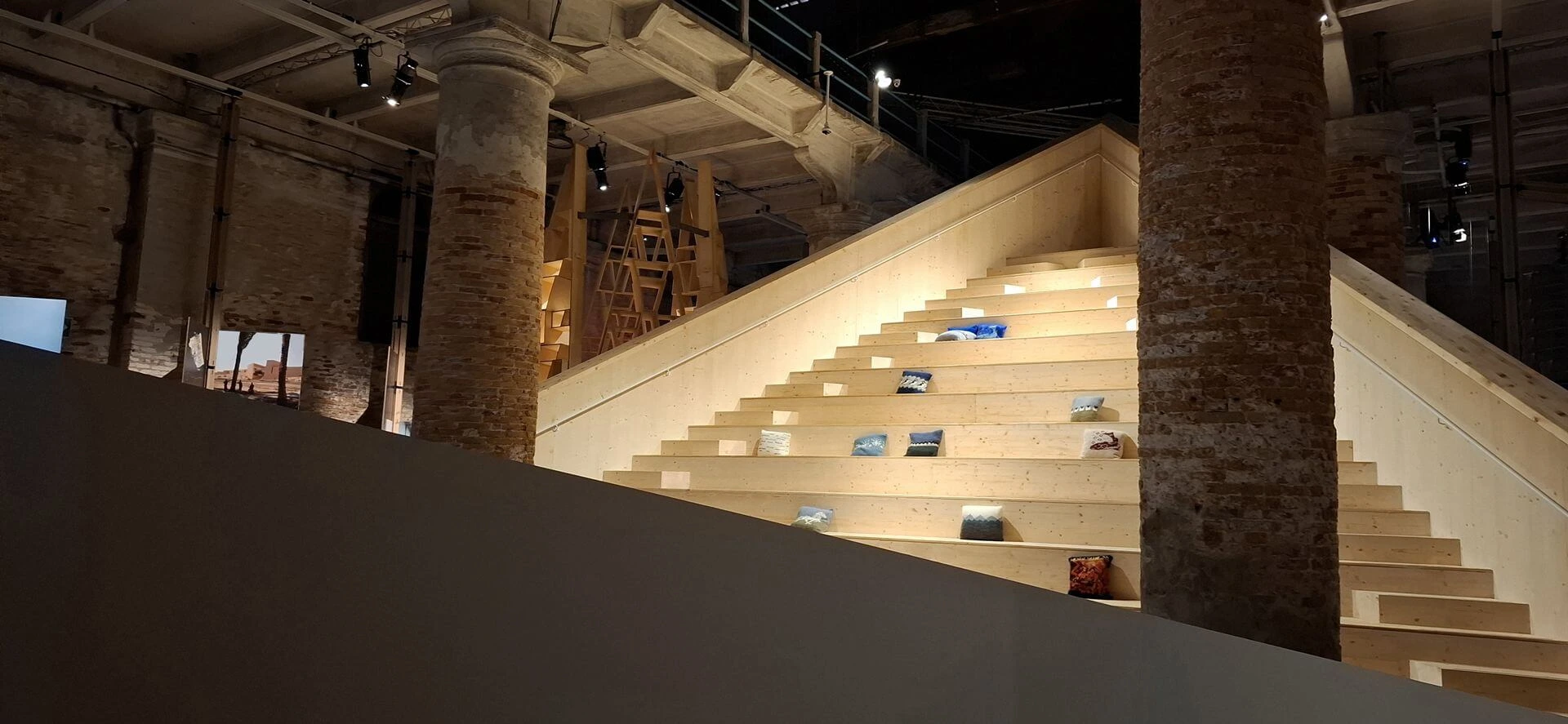
The exhibition took place in the Speakers’ Corner, an amphitheater integrated into the Arsenale’s exhibition space, designed to foster dialogue and exchange. This unique space, offers a flexible and engaging environment for presentations, workshops, and collaborative activities. Its terraced seating structure allows visitors to gather, encouraging interaction within a spatial form that complements the themes of the exhibition.
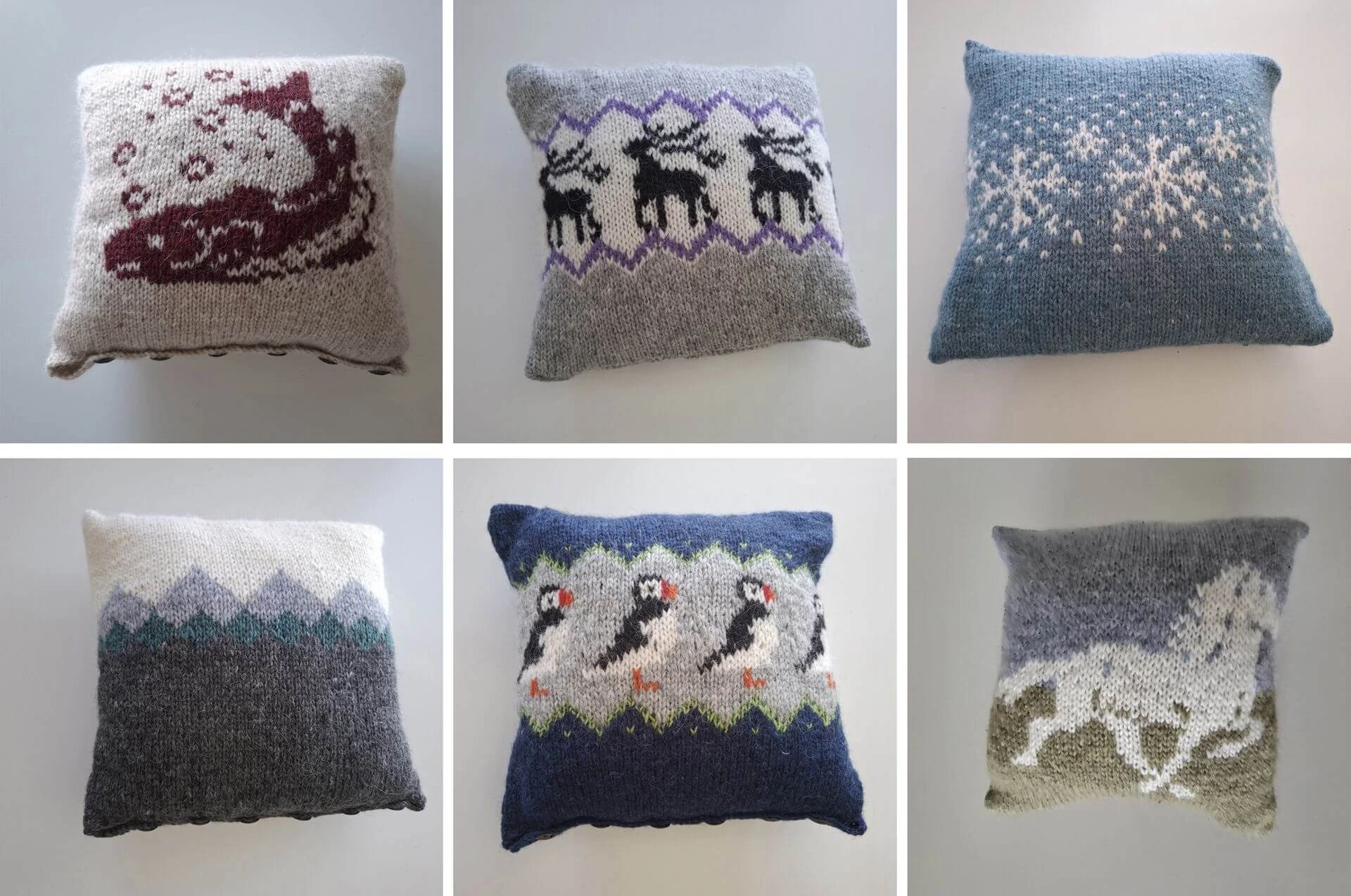
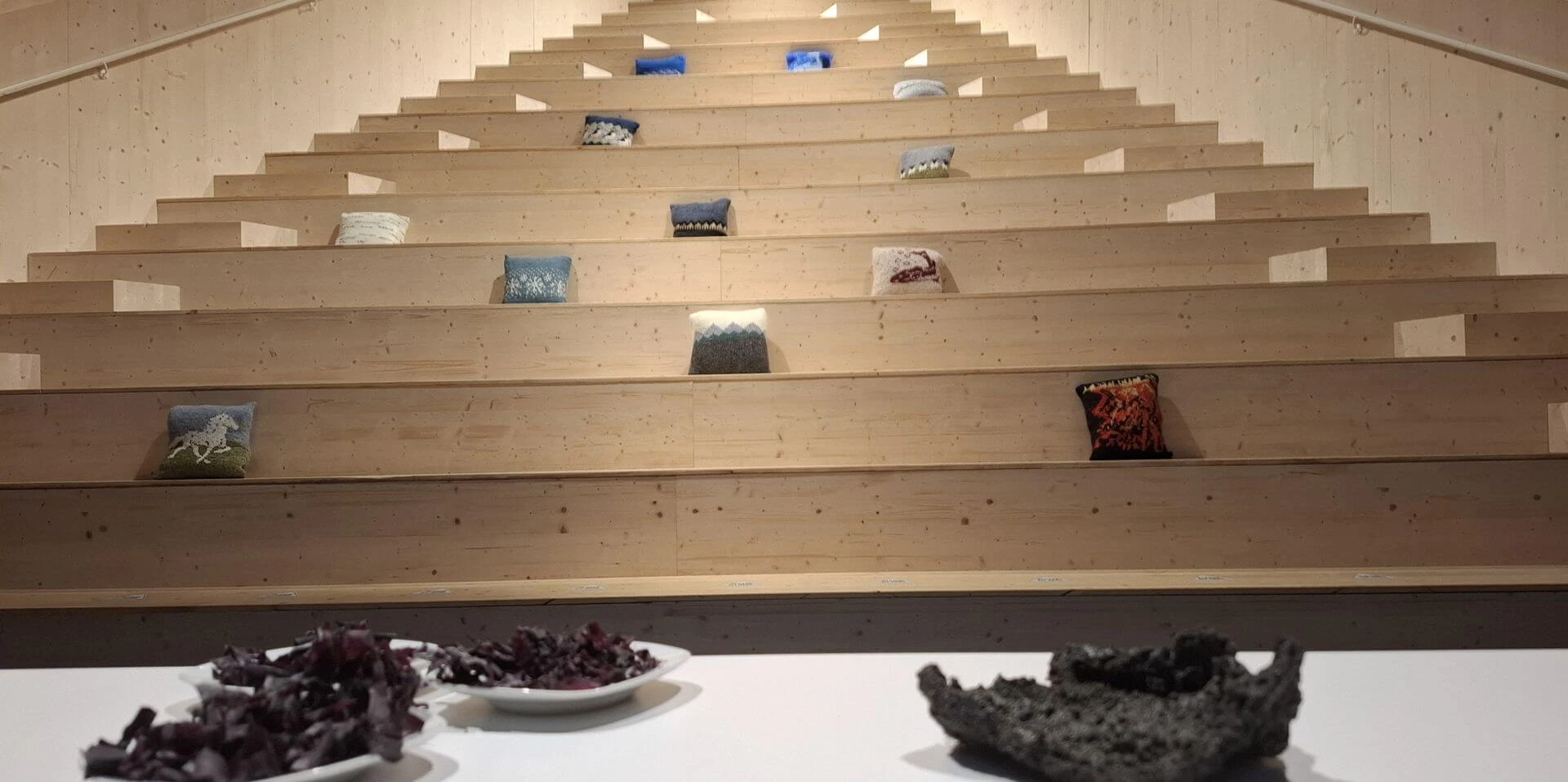
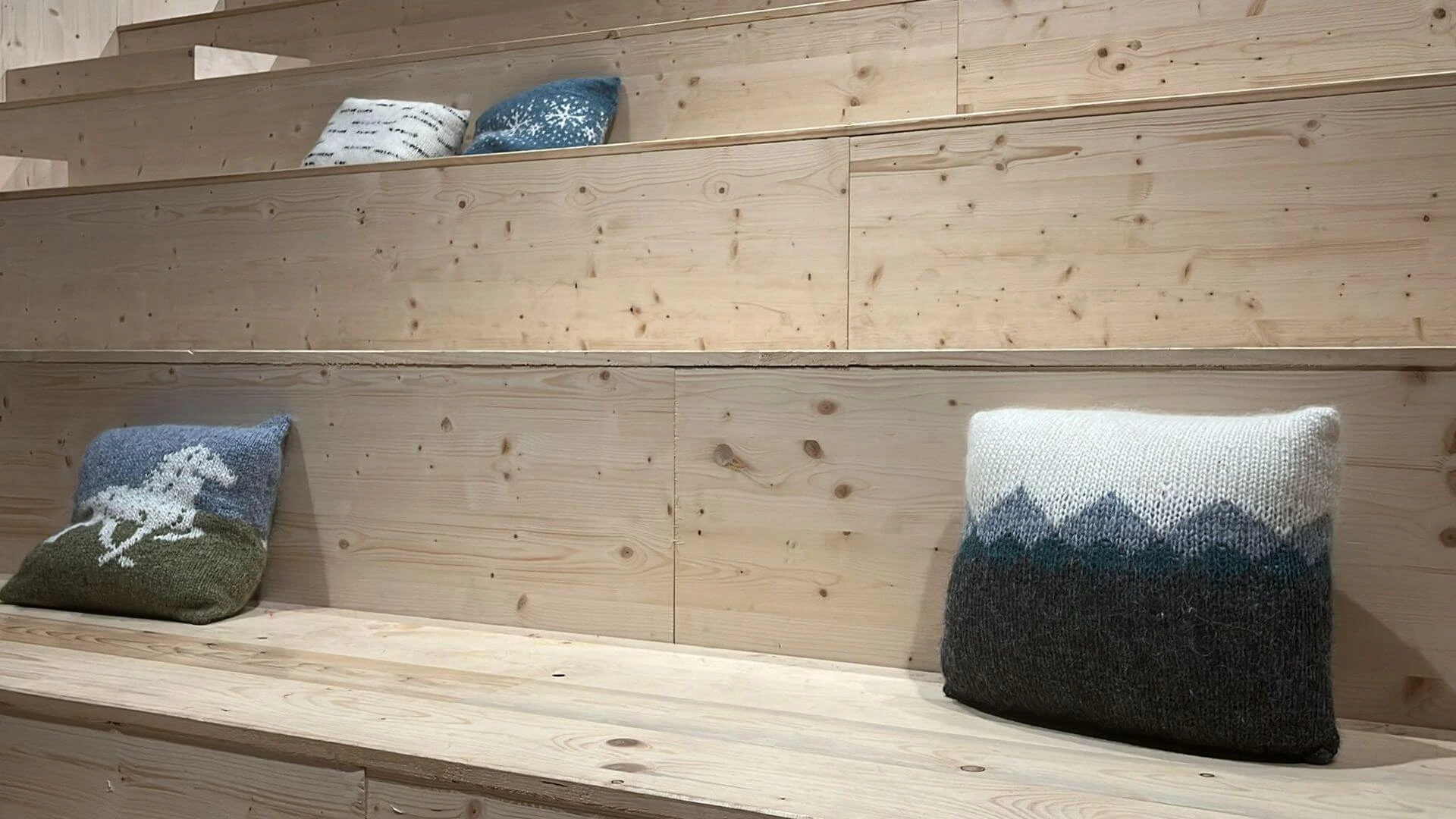
Each piece, hand-knitted by local artisans using traditional techniques, carries patterns inspired by the textures, elements, and shapes of the Icelandic landscape. Each pattern was inspired by Iceland’s volcanoes, mountains, snow-covered areas, rivers, local architectures as traditional turf-built spaces, and biodiversity—including birds, salmon, sheep, reindeer, and horses—creating an experience that connects the cultural with the natural.
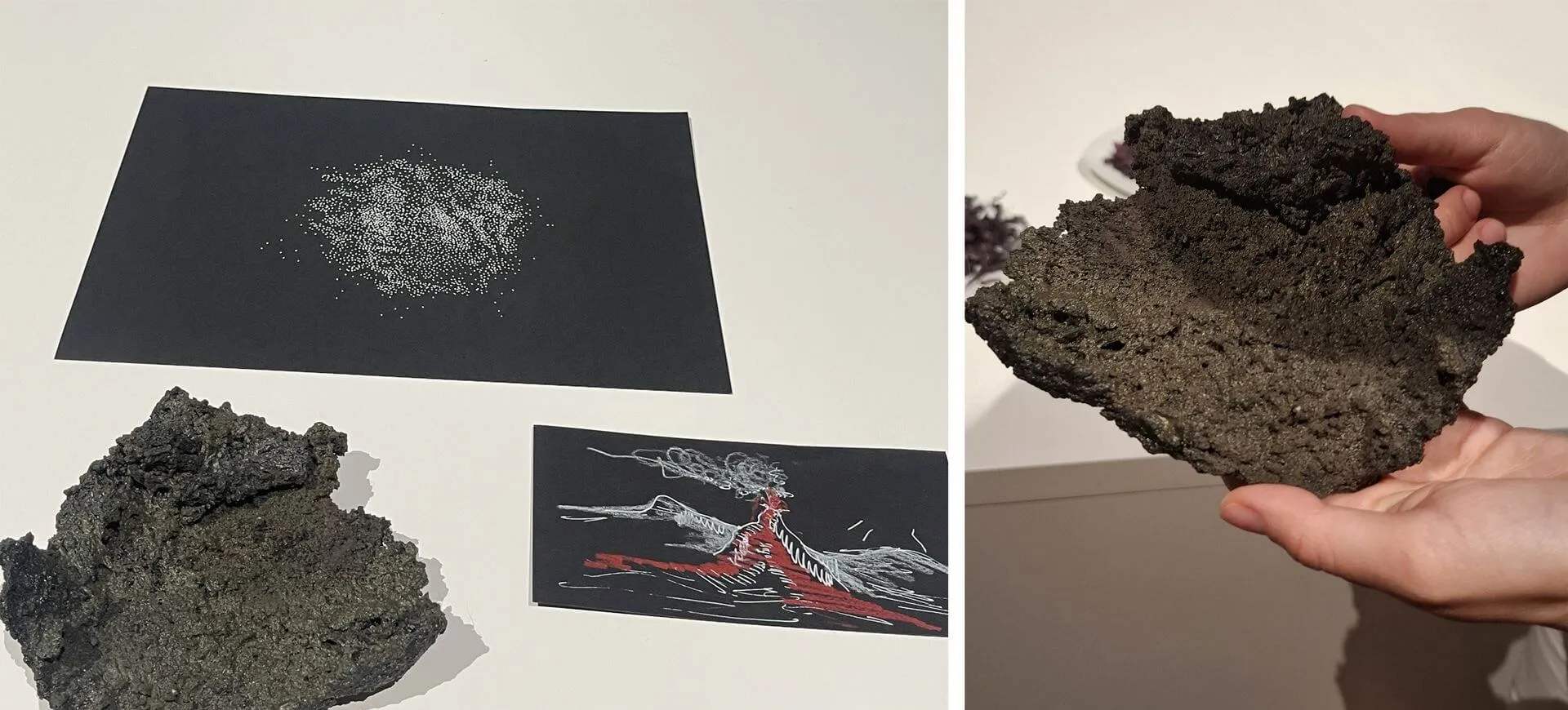
The woven pieces were integrated into the amphitheater seating, transforming them into a mosaic of the Icelandic landscape. We also included raw wool dyed with plant-based pigments, as well as a micro-landscape of rock made in wool; salmon skins, algae flavors, a herbarium of local plants, along with publications and works by landscape architecture students completed the proposal.
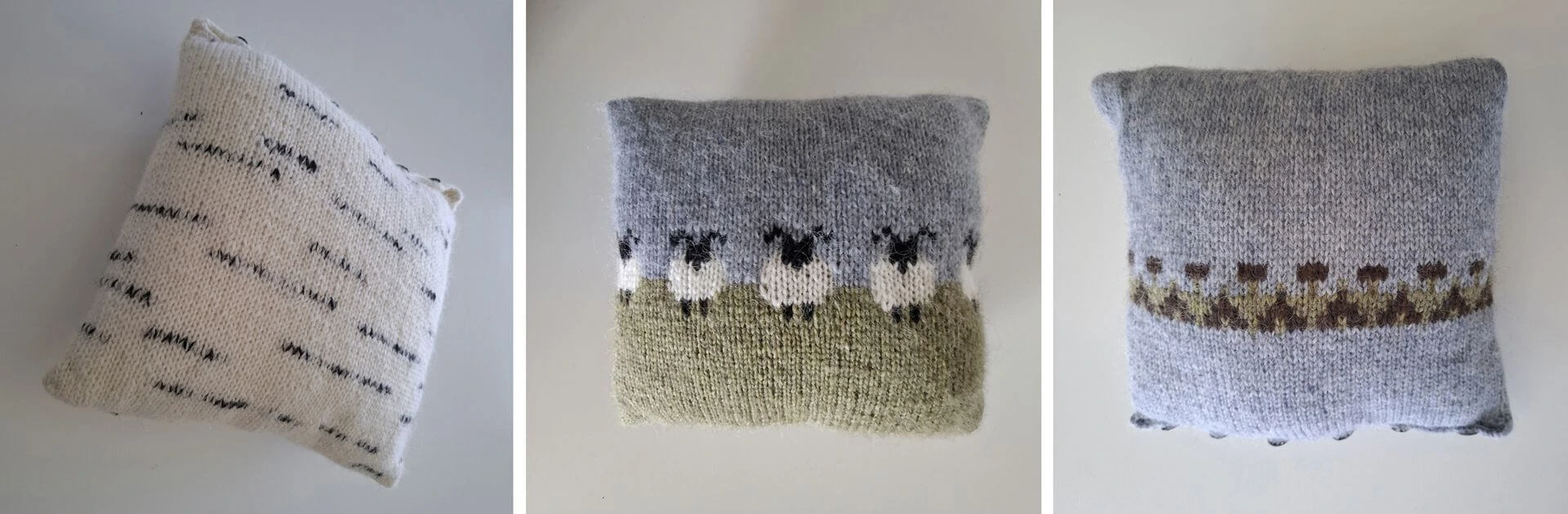
The exhibition pays tribute to the collective practice of knitting among women—an activity deeply rooted in community life, through which wool clothing is made to face the cold climate. The process was as enriching as the exhibition itself: we visited farms and weaving workshops, collected raw wool and plants for the herbarium, as well as vegetal pigments and lava from the recent eruption. The participating artisans created wool pieces based on patterns inspired by the Icelandic landscape, similar to the ones they use in their “lopapeysa” garments.
These woolen elements are designed to respond to the spatial qualities of the Speaker’s Corner—.
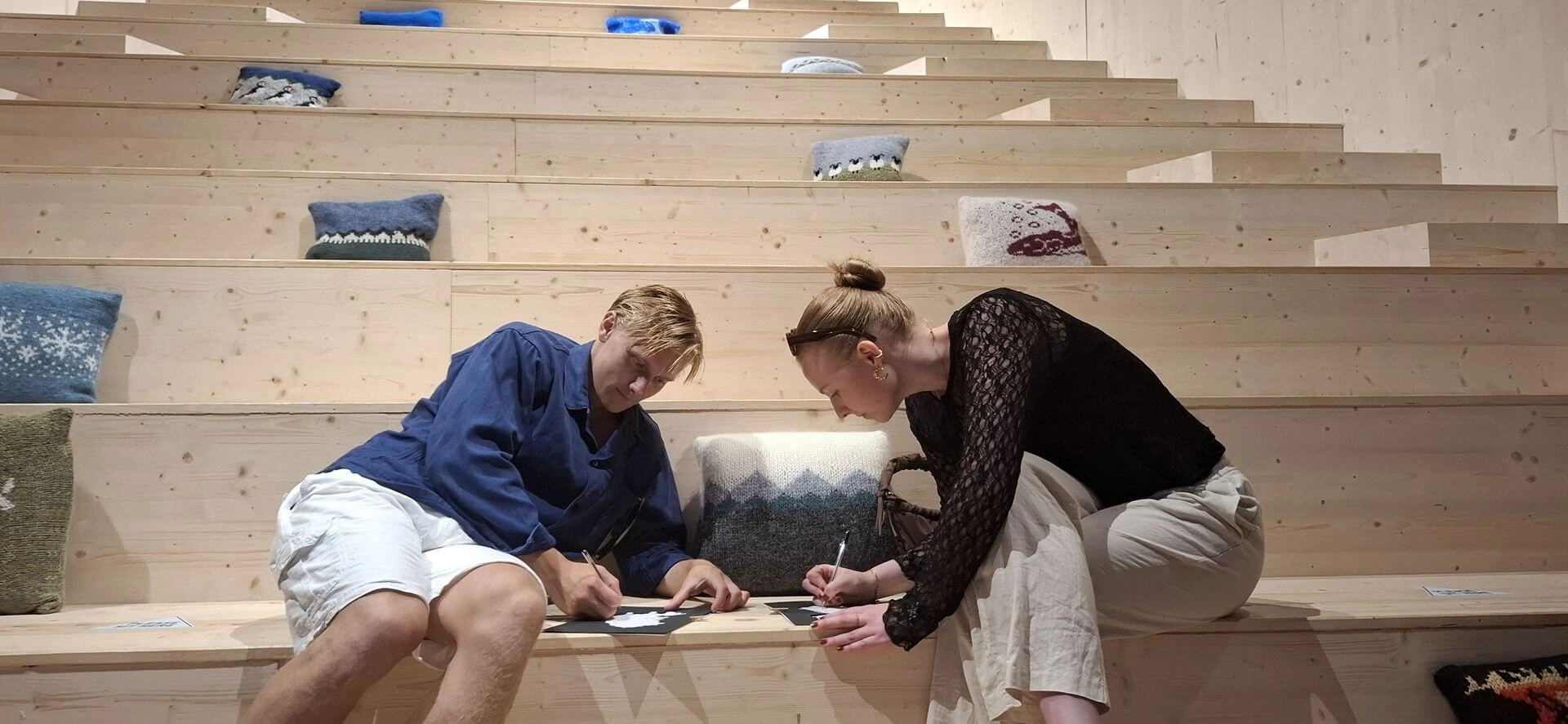
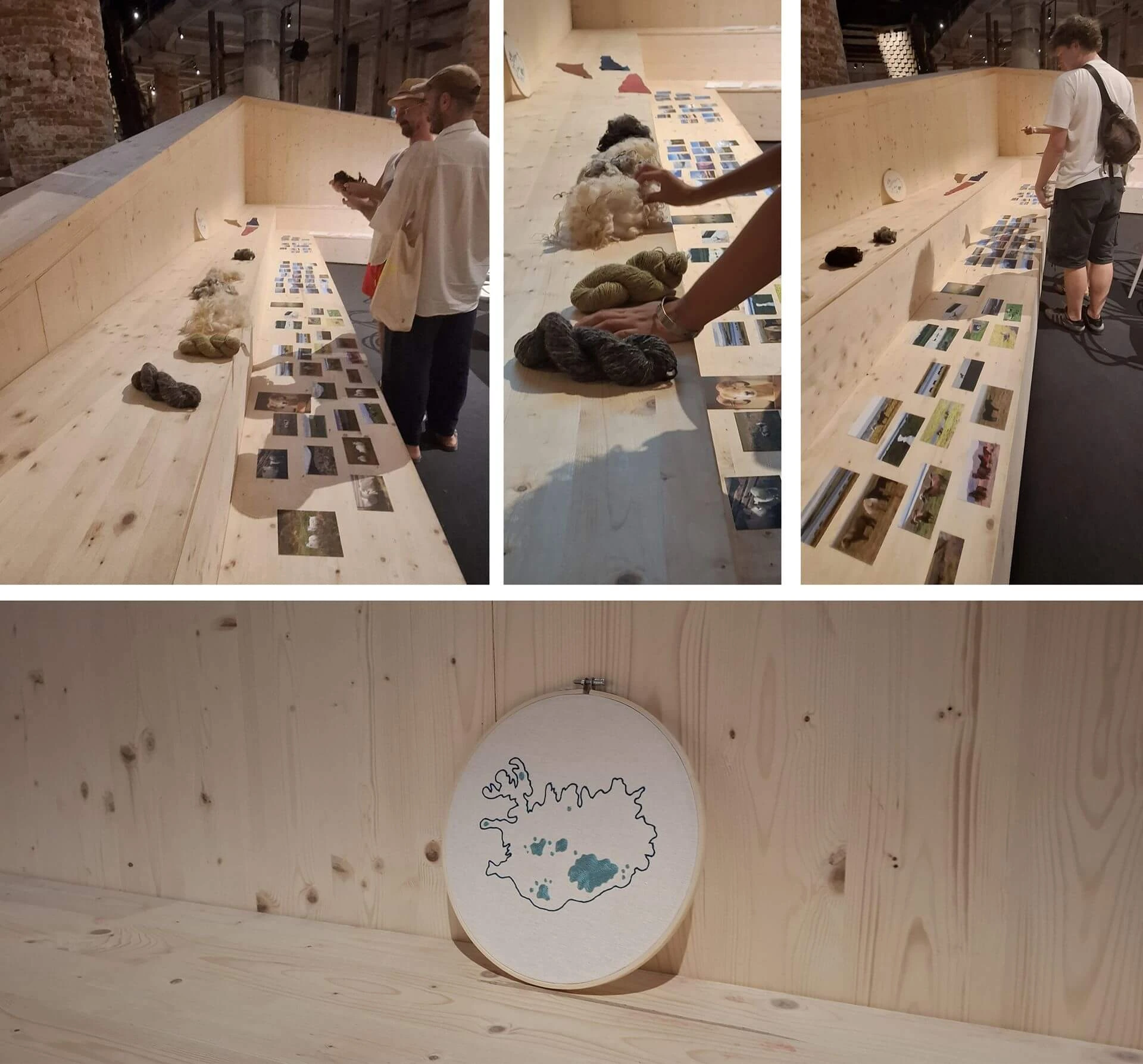
The exhibition area integrates craft, textures, and scents, reflecting a living heritage interwoven with the land. It offers a sensory experience with raw and processed wool.
Visitors may also hold lava from the recent Sundhnúksgígar eruption, taste algae, explore a herbarium of native Icelandic plants, and finally contribute their own written reflections about the landscape on silhouettes of Iceland’s map.
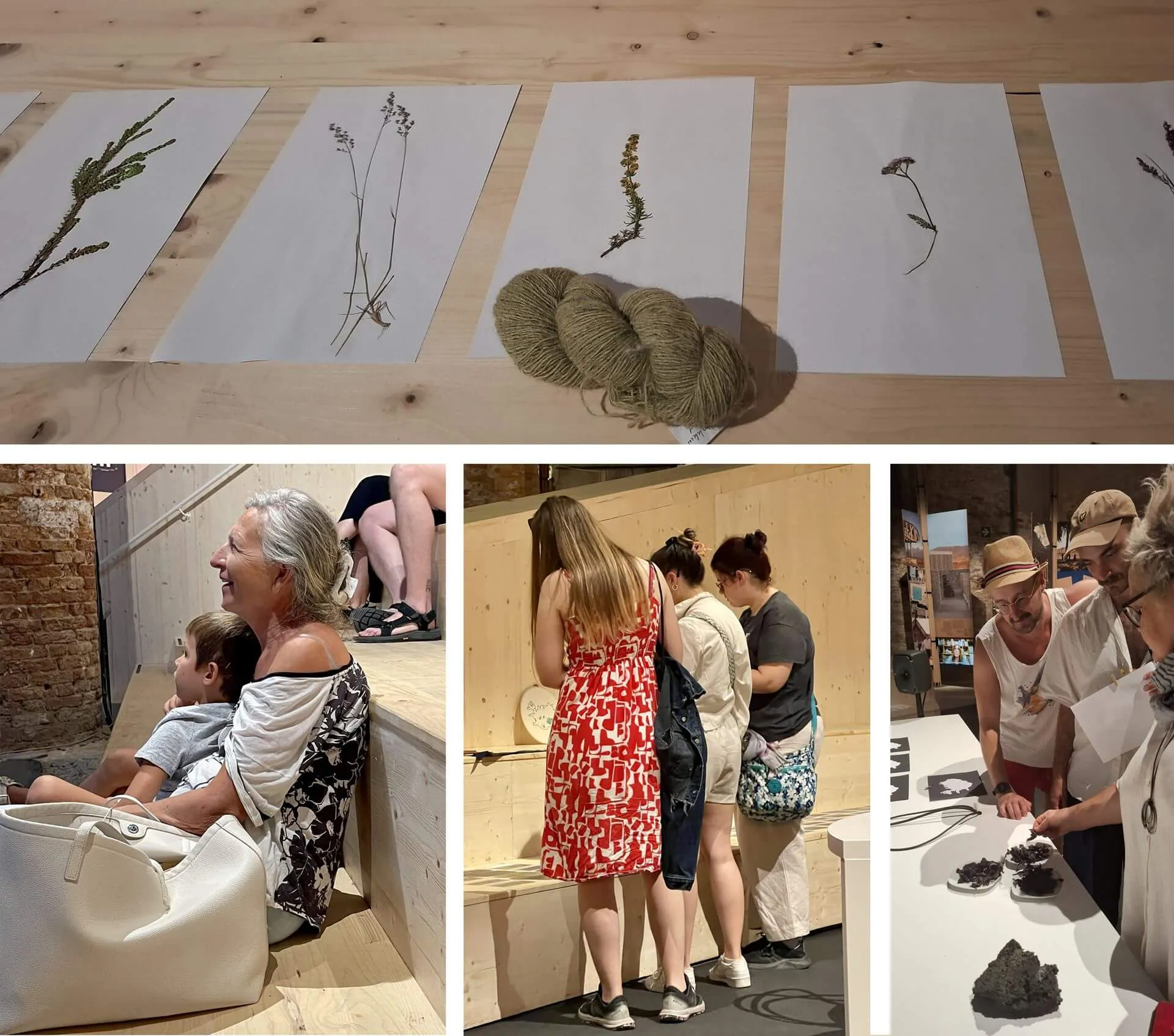
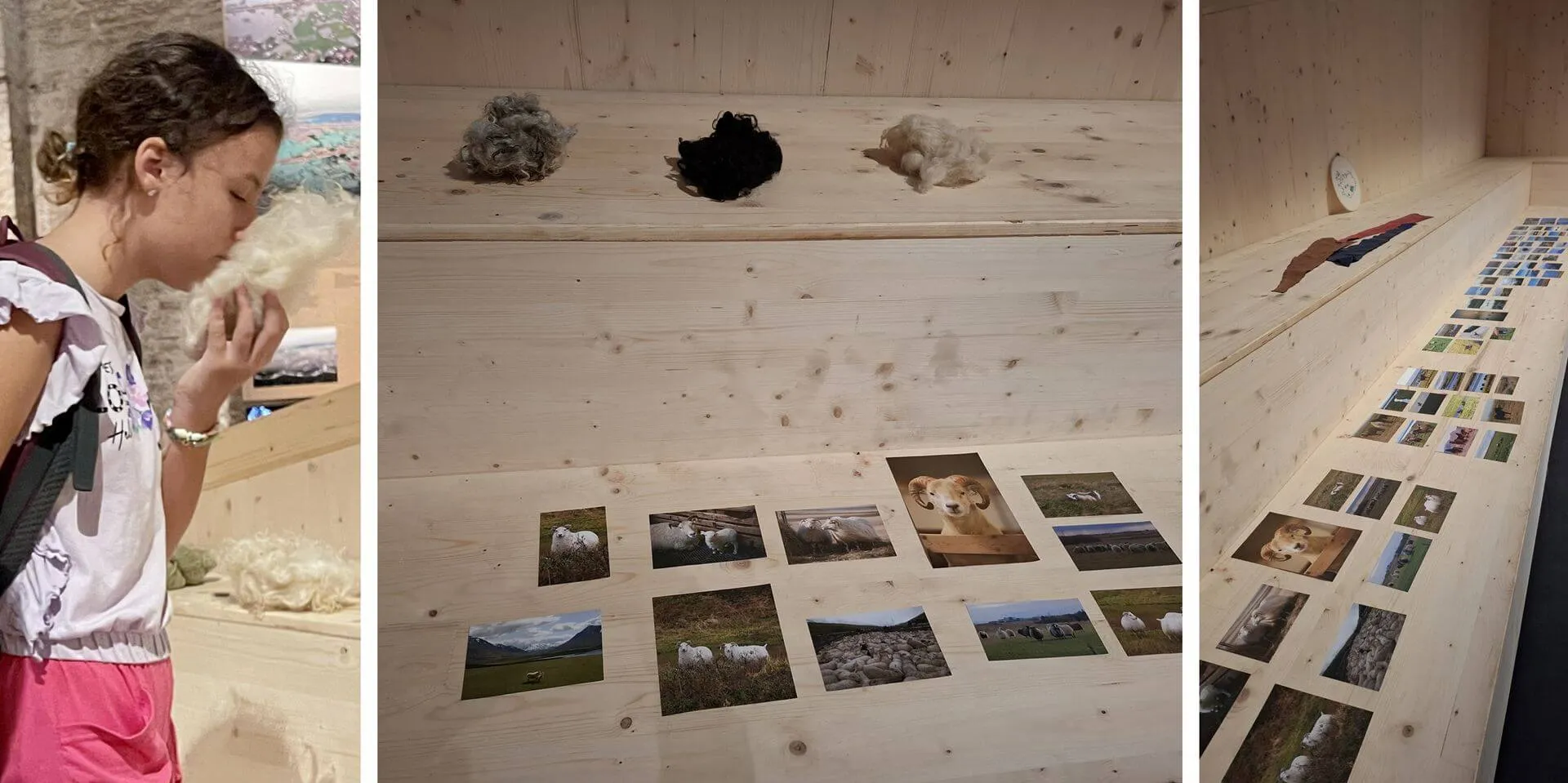
During the exhibition, visitors may touch the wool—activating tactile and olfactory memory—
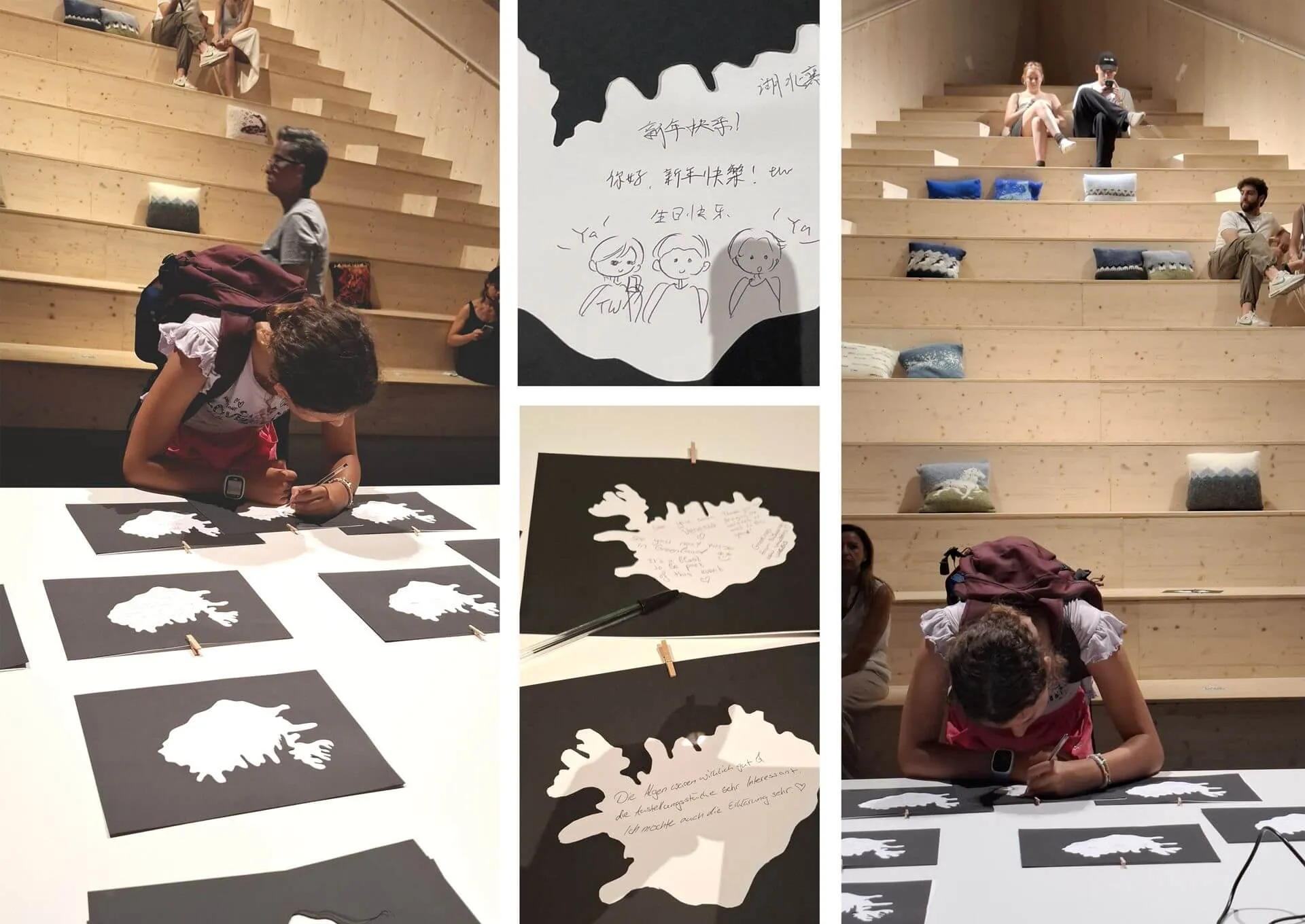
For two days, the space transformed into a living laboratory, hosting presentations and workshops that invited reflection on how nature and human coexistence can intertwine to shape more sensitive environments.
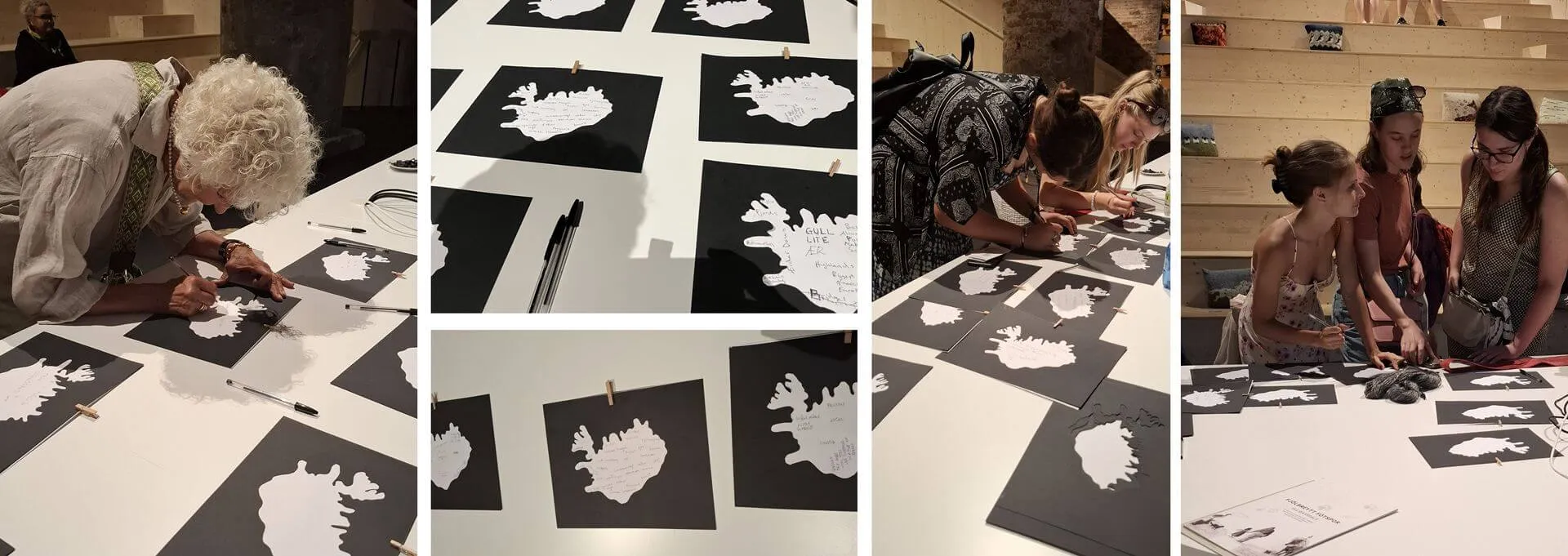
The exhibition became a gathering place to share, exchange, and weave new ways of connecting with the Icelandic landscape.
Credits:
Curatorial & Exhibition Design: Ivan Juarez
Team | Icelandic Nordcscape Lab: Ivan Juarez, Helena Guttormsdóttir, and Daniele Stefàno
knitters: Hafdís Jóhannsdóttir, from Ullarselið - Wool Centre | Hvanneyri
Edda and Dísa from Skessuprjón
Felting wool: Chenxin Feng
Curator Biennale Architettura Venezia: Carlo Ratti and GENS team of the Curator Speakers Corners
Special thanks go to all those who contributed to the realization of the exhibition, to the visitors who engaged with it, to the Biennale’s curatorial team, and to AUI University for their support and collaboration.