Walking as an experiential activity in which the body is involved as a sensitive action towards the perception of the landscape
With the aim of increasing sensory awareness of the Icelandic landscape, this excercise explores connections between the sensory experience of hearing, touching, smelling, observing, and tasting through the act of walking.
The particularities of Andakill protected area make this place unique for its geography and endemic biodiversity, as well as for its educational and research vocation. This particular context provides an excellent framework for developing a series of landscape on-site didactic approximations that engage sensitive dialogues with the natural environment.
Walking as a key method of approximation to the landscape: this initiative consists of a collective walk through the experience of the senses. Participants walk along the wetland trail, encouraging the exploration of soundscapes, and tactile, olfactory, gustatory and visual landscapes, by approaching from micro and macro scales. The sensory landscapes identified in this journey have been the following:
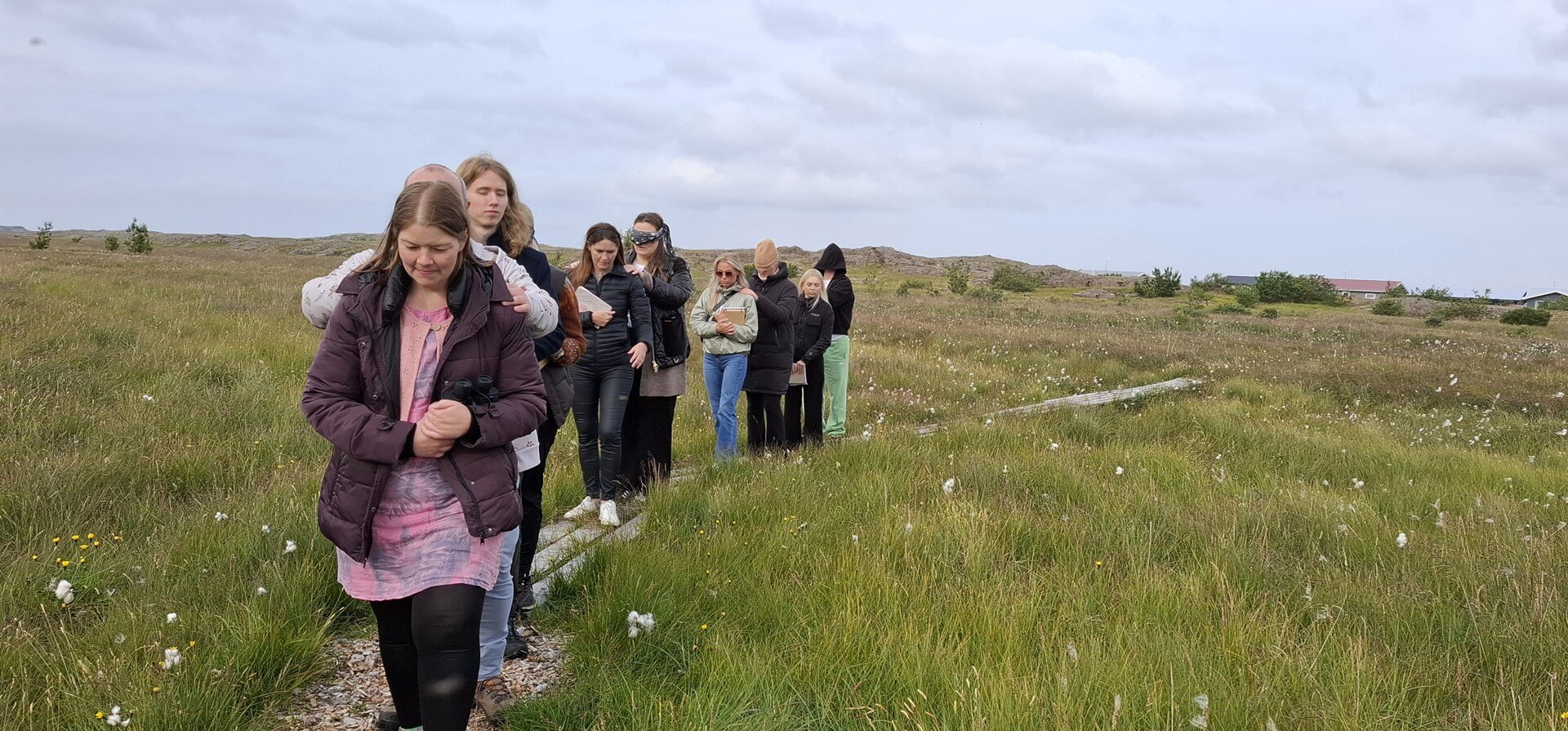

TACTILE LANDSCAPES
haptic perceptions. The experience of touching nature. An approach to the endemic landscape through the sense of touch, exploring different natural elements such as rocks, lichens, mosses, as well as wild wetland plants. Feeling the wind behind the rock, and its contrast when feeling the wind on top of the rock.
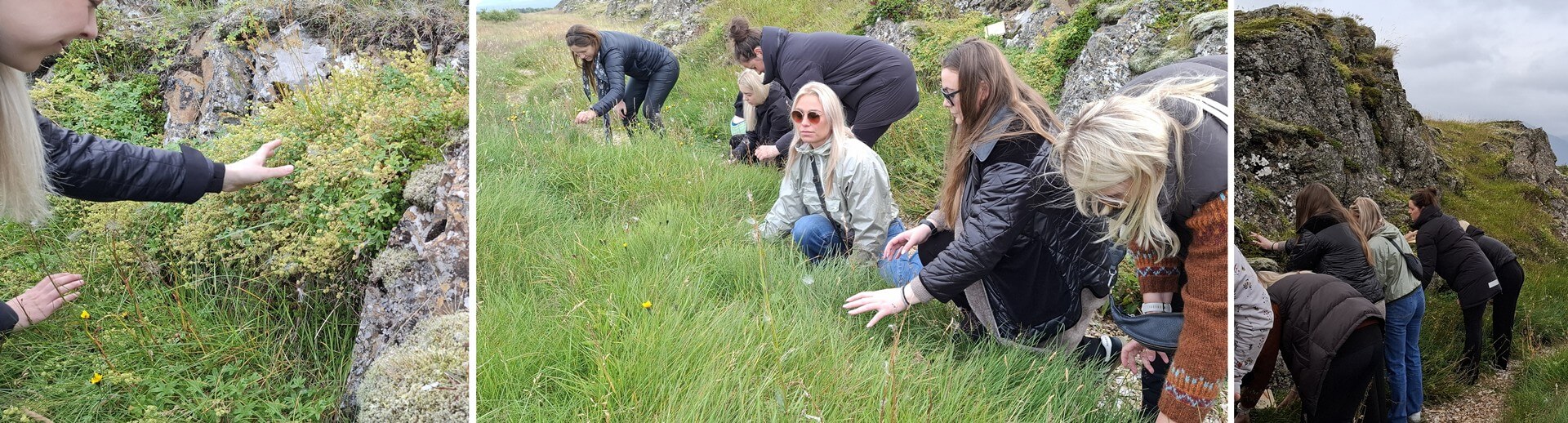
SOUNDSCAPES
The sound environment explores the sense of hearing. Listening to footsteps, the sound of wind and birds. Listening to water and vegetation moving in the wind. And, above all, listening to the silence of the vast landscape.

TASTESCAPES
Throughout the walk, participants become intimately aware of the native vegetation through their sense of taste, while picking and tasting different wild fruits and berries.

VISUALSCAPES
Micro and macro visual perception of the landscape. On the one hand, close-up observation of the micro landscapes, using the magnifying glass and, on the other hand, a broader scale, contemplating the horizon, the different sceneries that constitute the landscape, and reaching the mountains as a background.
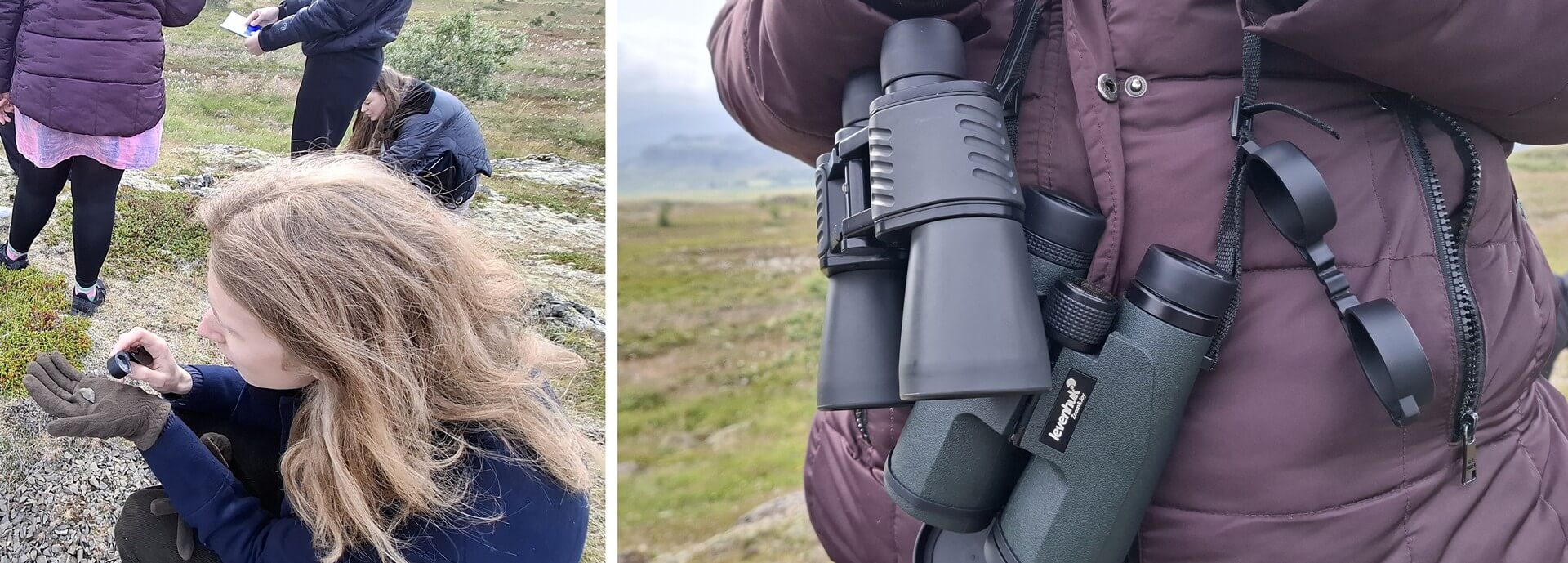
SCENTSCAPES
The sense of smell as an evocative connection associated with place, memory and experience. Smelling nature, humidity, being aware of breathing fresh air, being in the encounter of the mountain and the coastal landscape.
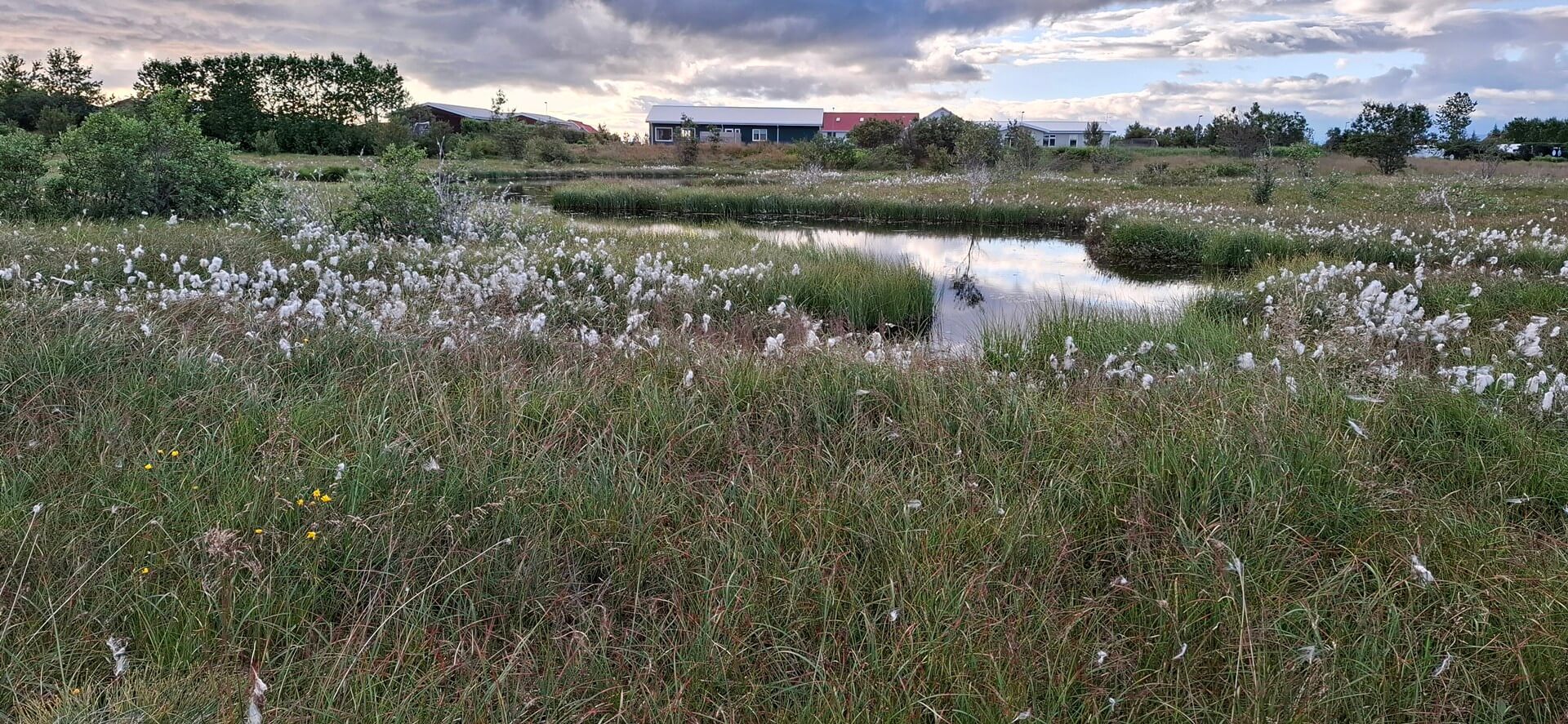
The sensory walk raises questions on how a phenomenological approach could become a significant tool for understanding our environment
From this perceptual-didactic journey, walking is proposed as an experiential activity in which the body is involved as an action toward landscape perception. From this approach, the activity seeks to raise awareness on ecological values, and as an interpretive link that communicates unique experiences of the local environment. Based on this, the sensory walk raises questions on how a phenomenological approach could become a significant tool for understanding our environment.
How is the sensory walk experience a source of landscape awareness?