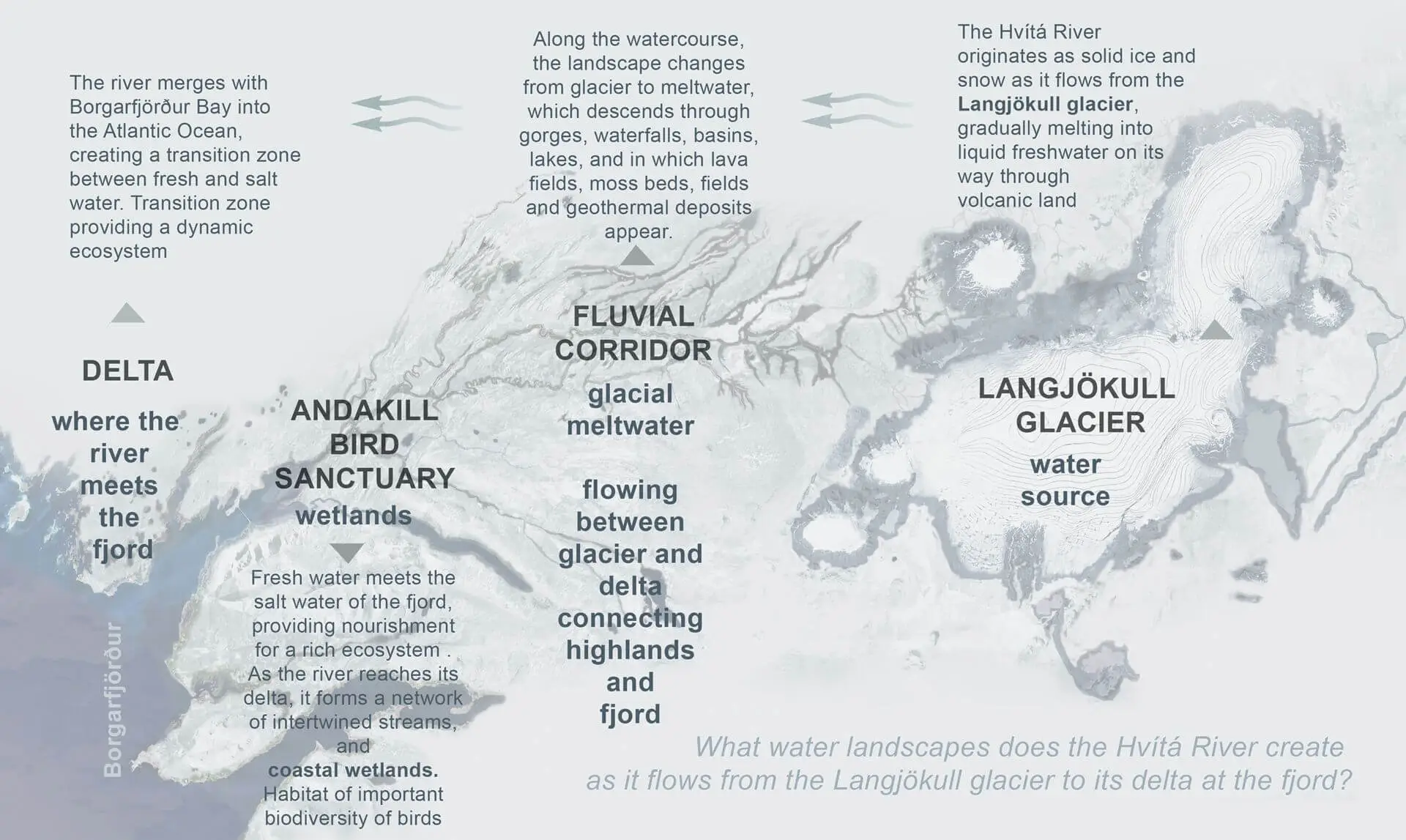
The project explores and traces the water journey of the Hvítá River, from the Langjökull glacier to its meeting point with fjord at the Atlantic Ocean
How does the exploration of the Icelandic waterscape inspire us to rethink our relationship with the planet's fragile ecosystems?
What landscapes does the Hvítá River create as it flows from the Langjökull glacier, gradually melting toward its delta at the fjord?
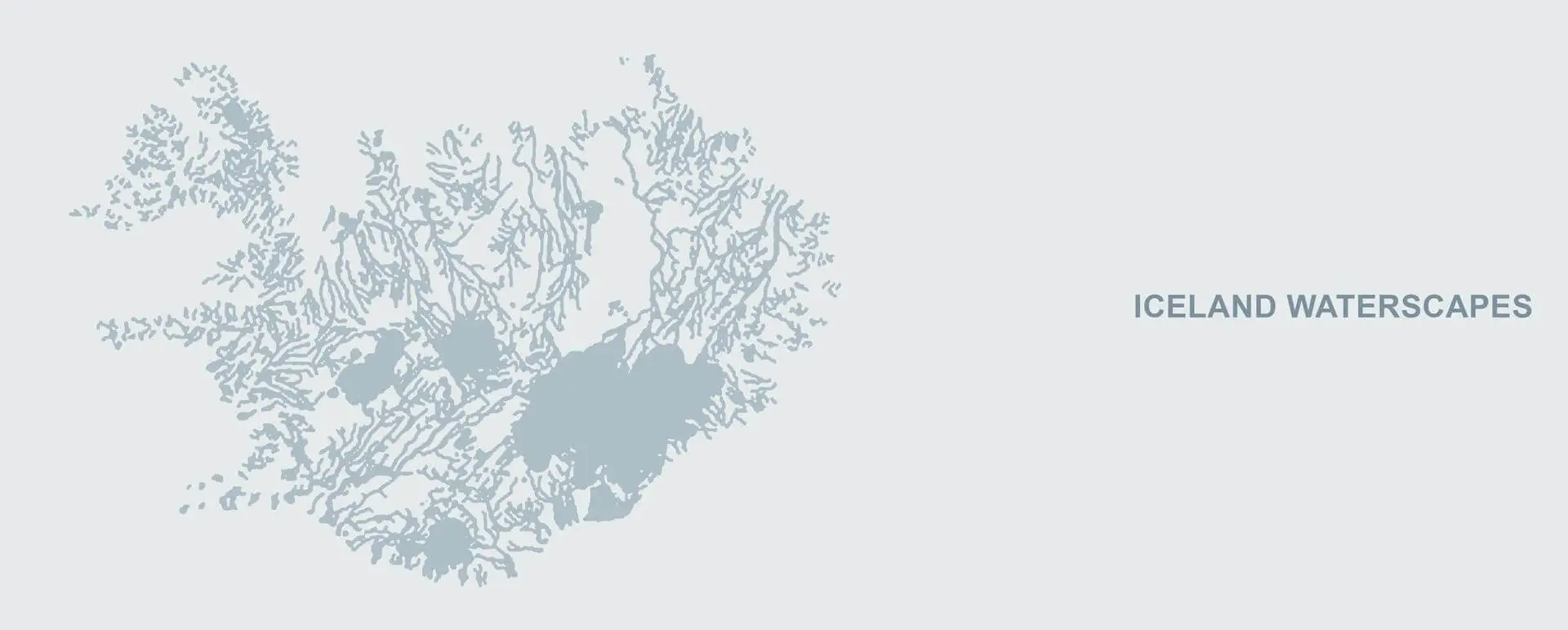
Glaciers are vital to the planet as freshwater reservoirs, as climate and ecological regulators, as life support and essential as memory archives. Glaciers, and in particular the glaciers of Iceland, have been progressively diminishing, becoming evident in the retreat of the ice, in the displacement of their ecosystems, in the alteration of river flows and in the cultural memory of the disappearing landscapes. A process of loss that increases our sensitivity to the fragility of our planet.
With the aim of honoring and exploring the fragile water-based ecosystems of Iceland, shaped by glacier-fed water, the project is conceived as practice-based research that aims to raise awareness of this sensitive territory
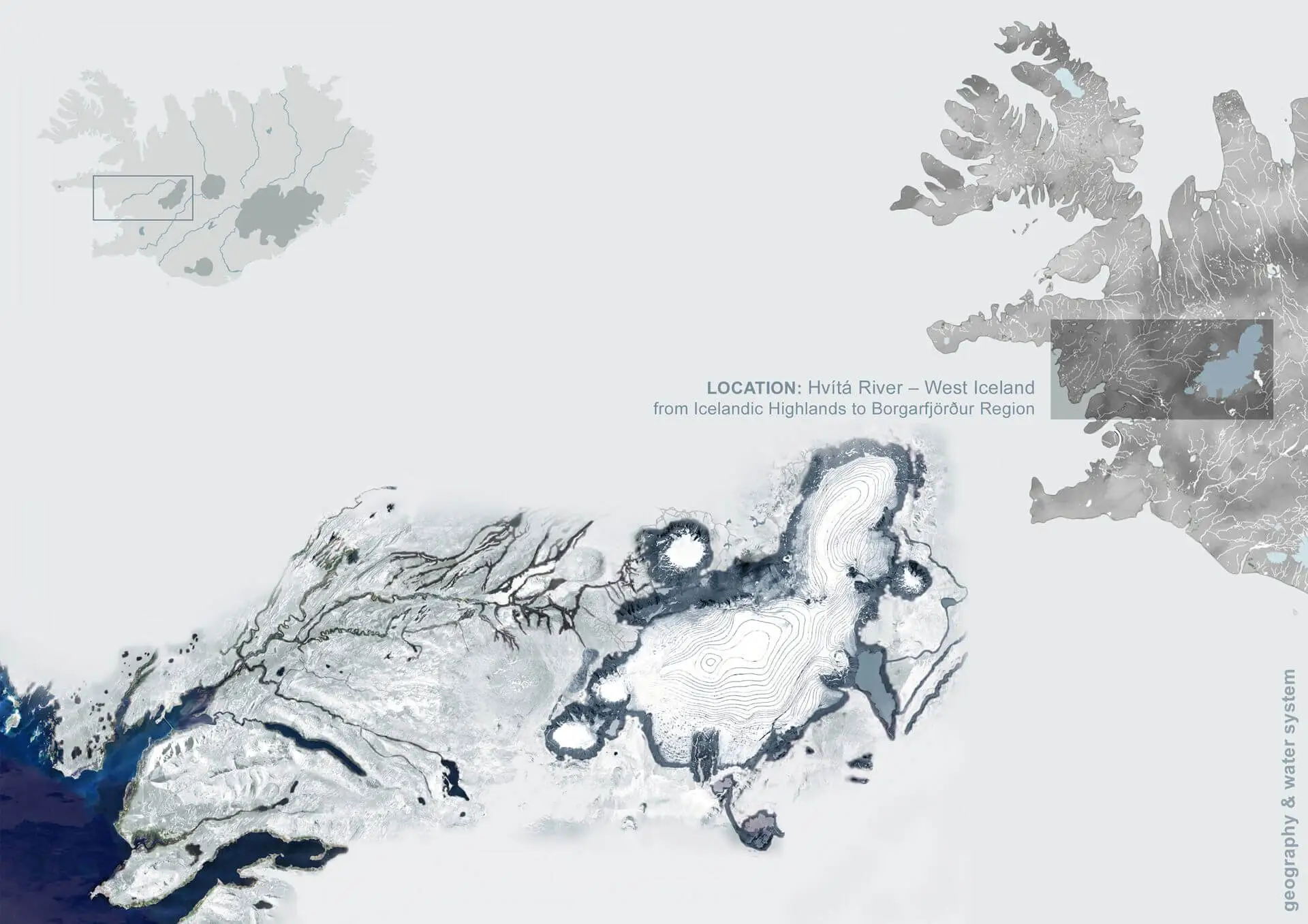
The journey of glacier-fed water interweaves different geographies, temporalities and states -liquid, solid, gaseous-. Following this thread, the research approaches waterscapes, establishing a dialogue between sensitive cognition and environmental mindset. From this perspective, the project explores glacial water as a key concept, as a means of approaching the territory by connecting tangible and intangible approaches.
The project aims to share and disseminate a series of cartographies, creating a visual narrative that reflects the interaction of water with the landscape. It also examines the different states of water, the biodiversity within this unique ecosystem, and how Hvítá River is experienced and interpreted from its different dynamics and geographies.
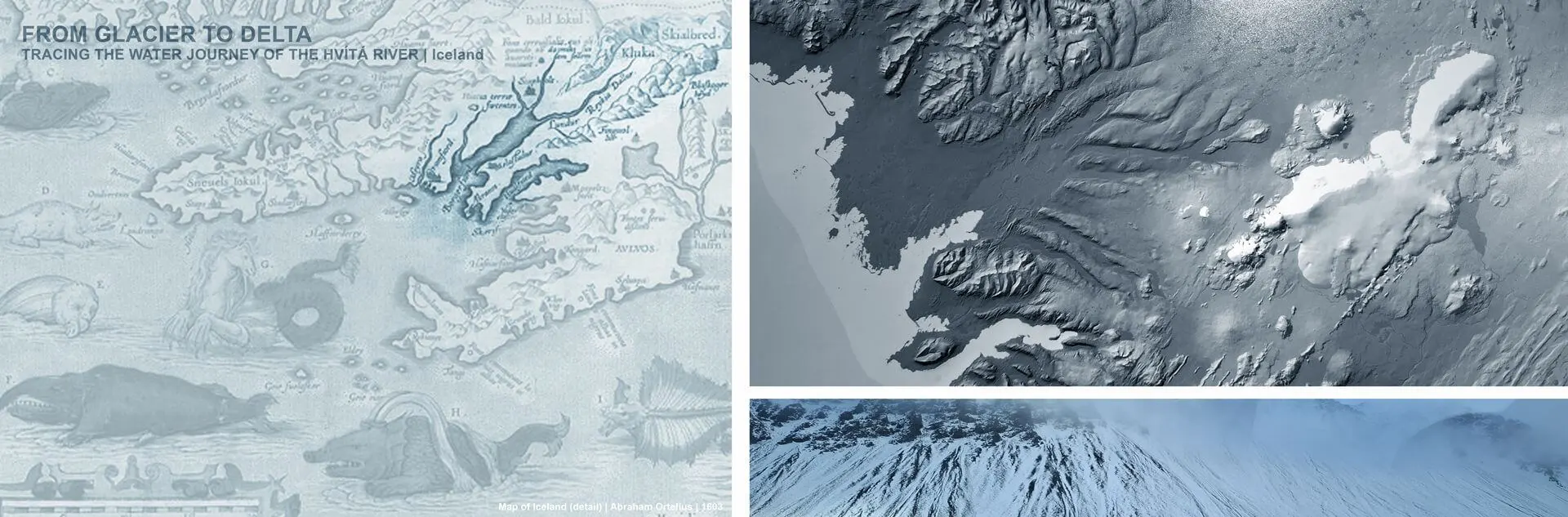
TRACING THE WATERCOURSE
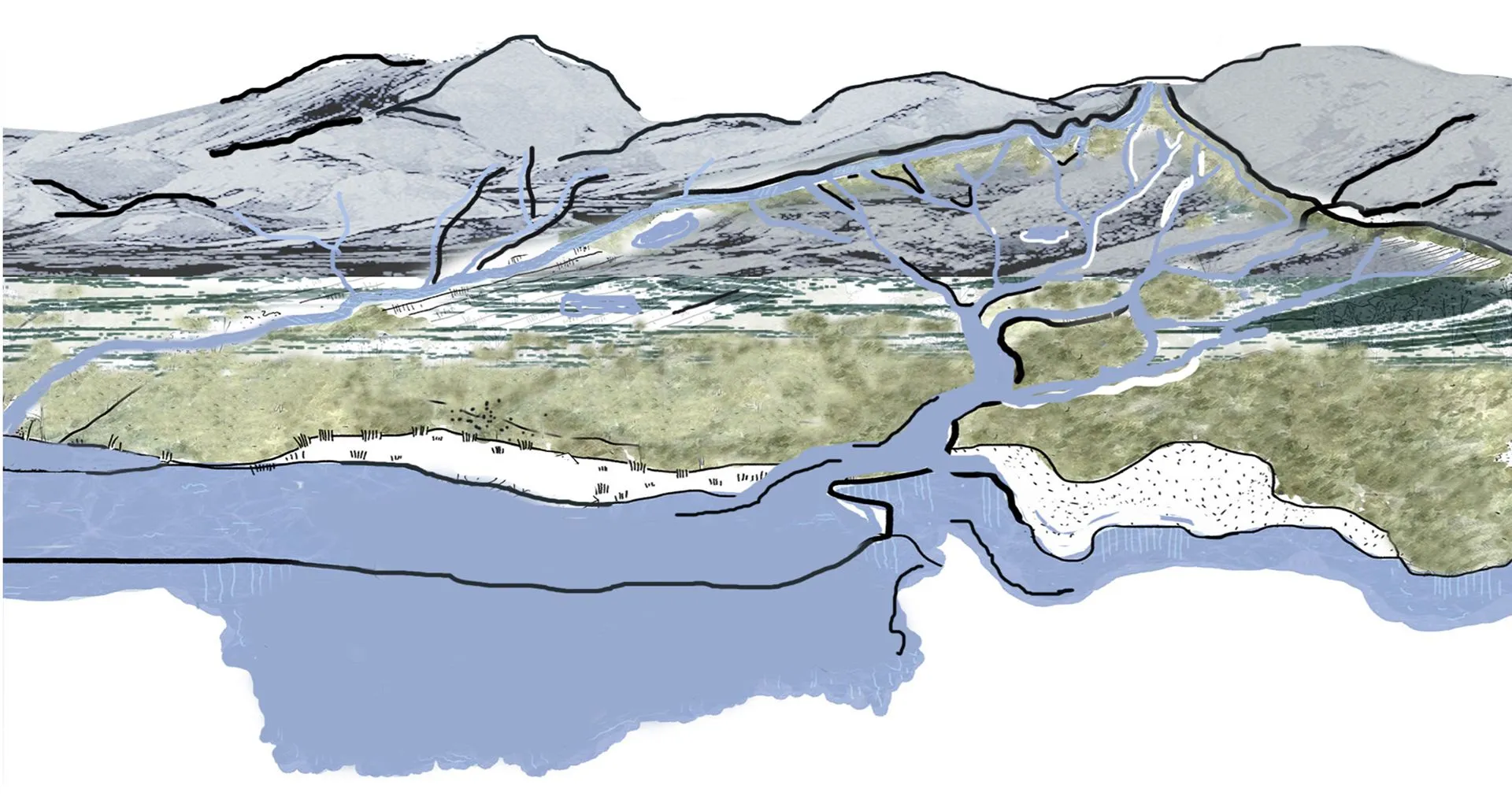
Hvíta River originates as solid ice and snow as it flows from Langjökull glacier, gradually melting into liquid water on its way down through the landscape of volcanic terrain. Along the watercourse, the landscape changes from glacier to wetland, flowing through valleys, waterfalls, and lakes, and featuring lava fields, moss, and geotermal deposits.
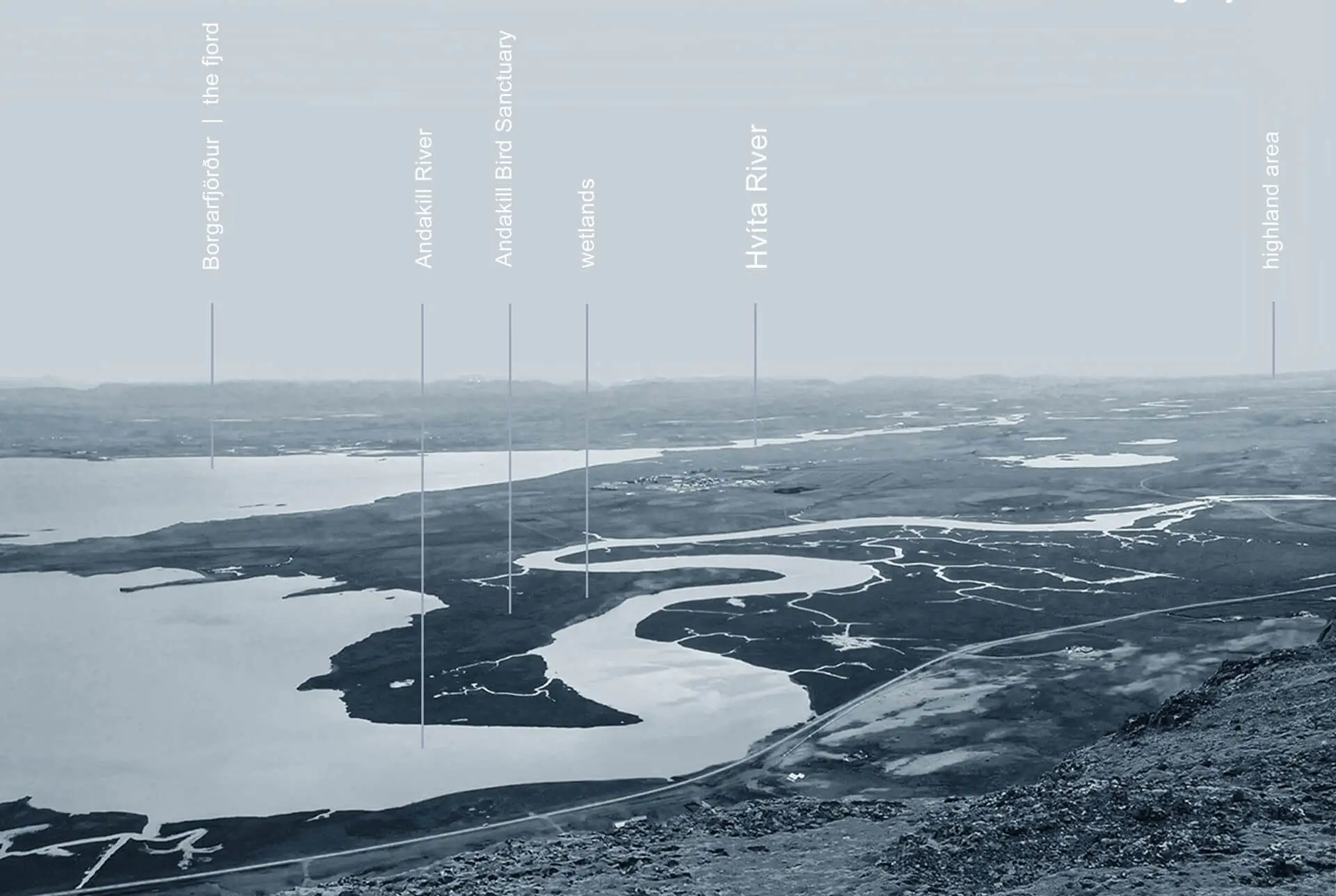
Along its course, freshwater meets the saltwater of the fjord, providing nourishment for a rich ecosystem. As the river reaches its delta it forms a network of intertwined streams, as well as coastal wetlands. The river merges with Borgarfjörður Bay into the Atlantic Ocean, creating a transitional zone between freshwater and saltwater, which is home to an important biodiversity of birds and a dynamic ecosystem. As a result, the landscape blends glacial Waters, volcanic áreas, and wetlands in a unique natural environment.
GLACIER LANGJÖKULL
source & memory of water
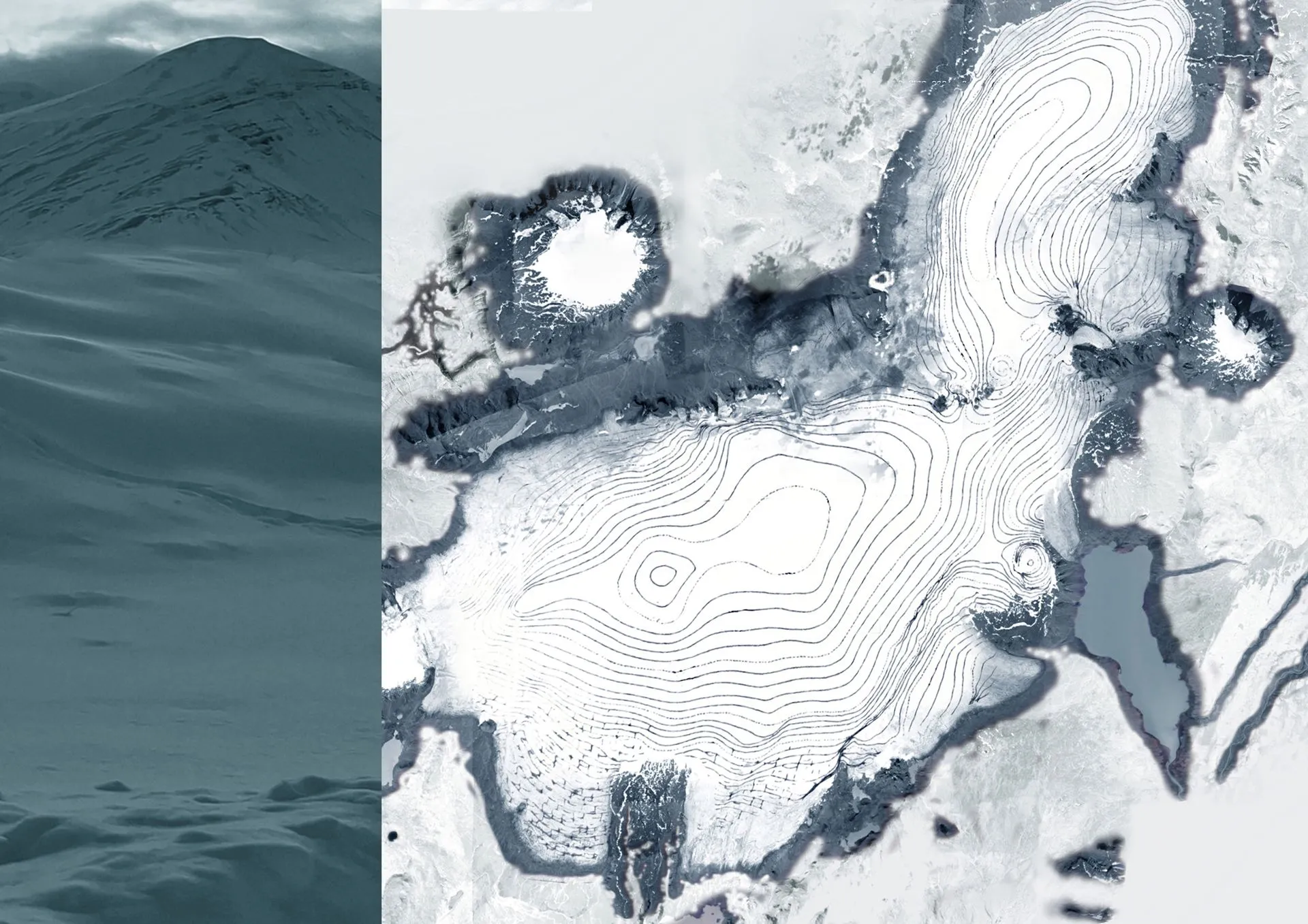
Langjökull Glacier, source of fresh water; frozen reservoir of time. Time is stored in frozen form, from layers of ice that preserve ancestral memories, while the melted liquid flows downward, shaping the land as it carries memories and life.
Hvíta River originates as solid ice and snow as it flows from the Langjökull glacier (1,450 meters above sea level), gradually melting into liquid water on its way through the steep and rugged volcanic landscape towards the meeting of the delta with the sea.
FLUVIAL CORRIDOR
glacial meltwaters
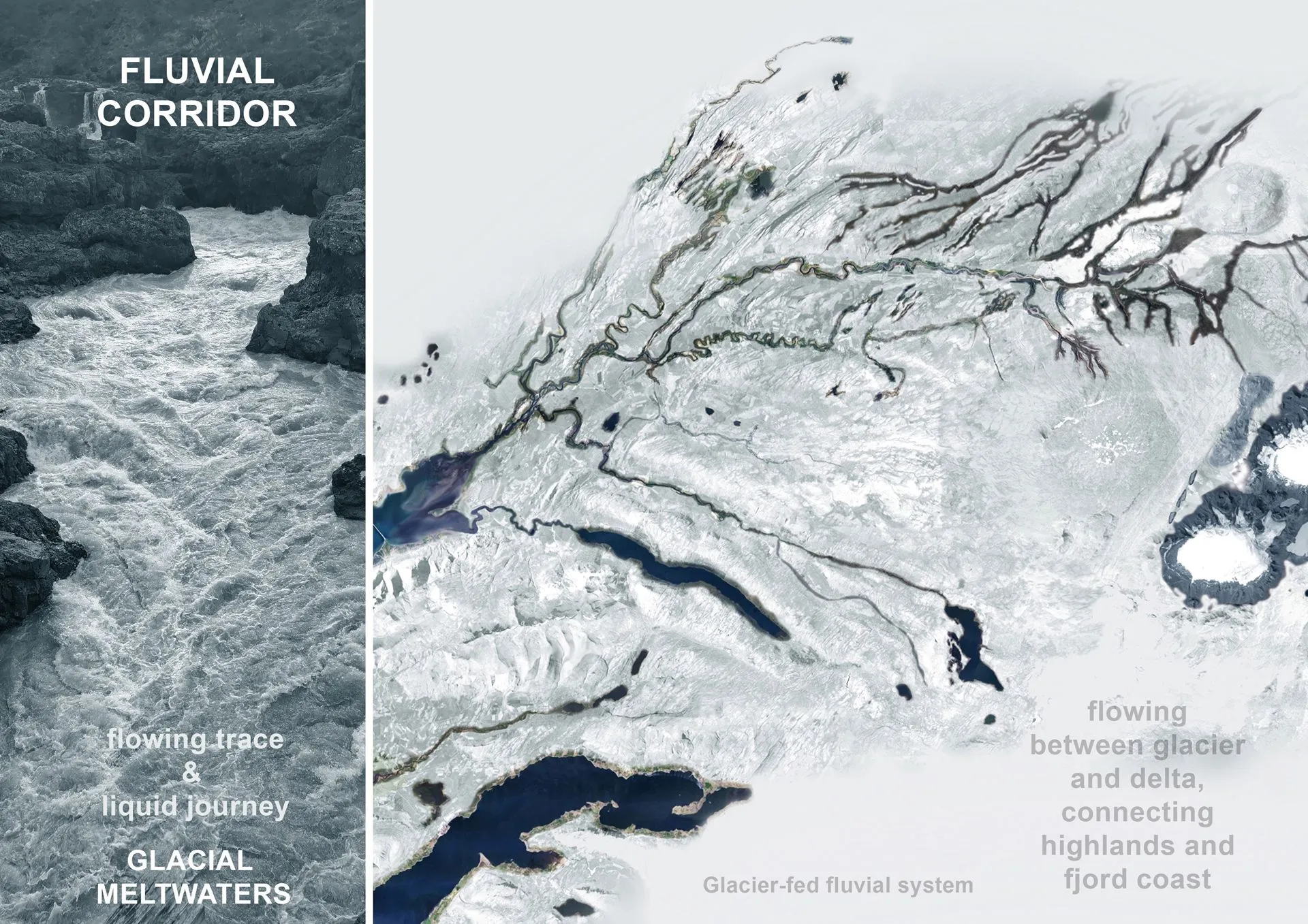
flowing between glacier and delta connecting highlands and fjord
Along the watercourse, the landscape changes from glacier to meltwater.
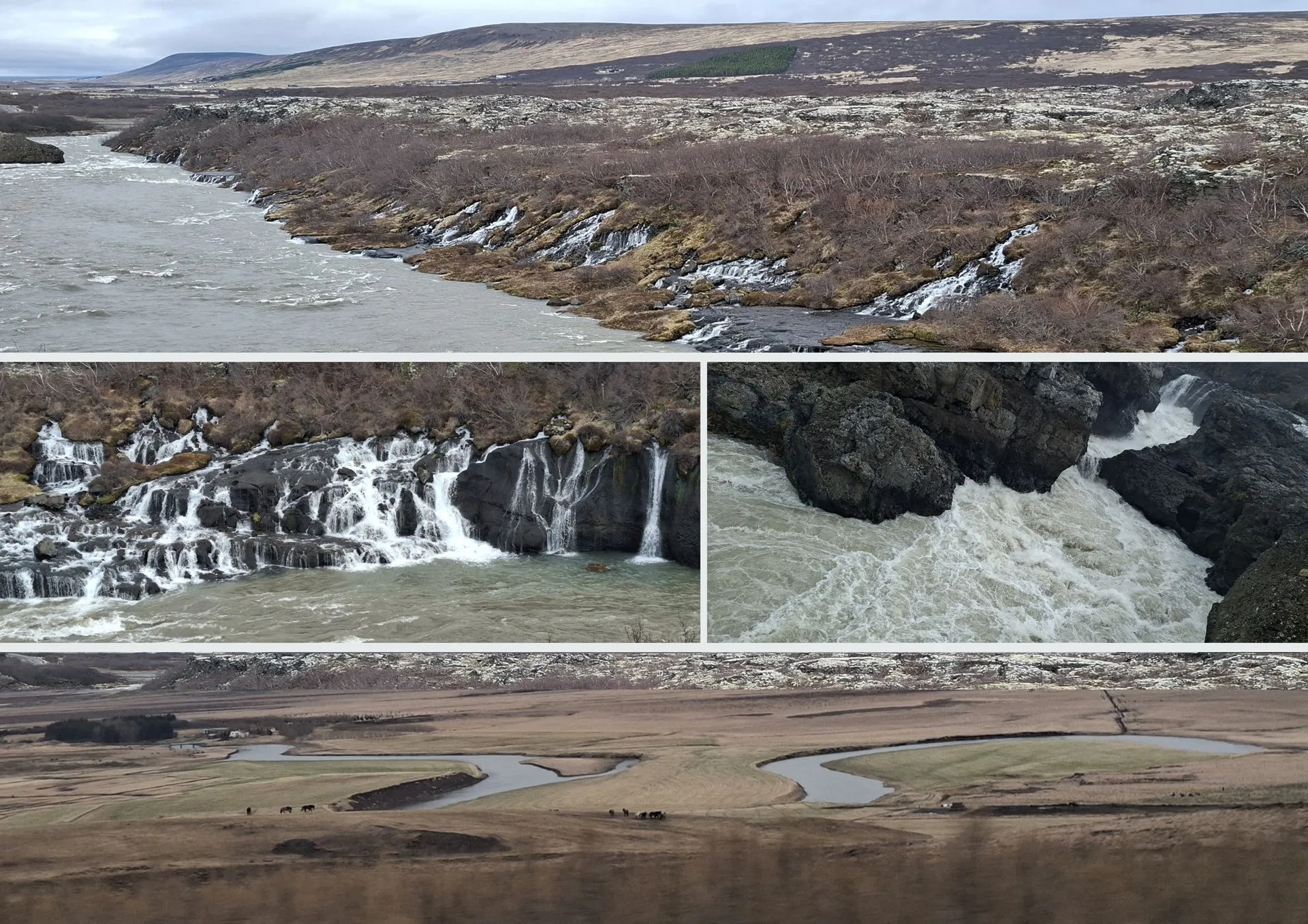
Descending and falling through narrow gorges and basalt formations, the water carves its way down through volcanic landscapes, lava fields, and meadows by shaping waterfalls, basins, and lakes. A landscape of lava fields, moss beds, agricultural fields and geothermal deposits.
DELTA
where the river meets the fjord

Fresh water meets the salt water of the fjord, providing nourishment for a rich ecosystem. As the river reaches its delta, it forms a network of intertwined streams, and coastal wetlands.
HVÍTA RIVER | WATER COURSE